Sourcing Natural Wool in Canada: Farms, Co-ops, and Markets

Canada has an active wool-producing sector, though it is fragmented compared to countries with centralized wool marketing boards. Most Canadian wool comes from small and medium-sized farms that sell fleece directly to hand-spinners and fiber artists, rather than through the commercial commodity wool market. This structure creates both opportunities and limitations for crafters looking to source domestic fiber.
This guide covers where to find raw fleece, processed roving, and finished yarn across Canada's main regions, and what to look for when evaluating sources.
Understanding the supply chain
Canadian wool reaches crafters through several channels:
- Farm direct: Buying fleece directly from the farmer, typically raw (shorn, uncleaned) or skirted (with the dirty edge wool removed). Prices vary significantly by breed, preparation, and region.
- Small mills: Some farms send fleece to small processing mills that wash, card, and — in some cases — spin the fiber into roving or yarn. The output is then sold under the farm or mill name.
- Fiber festivals: Annual events where producers sell directly to the public. These are the most efficient way to evaluate fleece quality before buying, since you can handle the fiber and speak with the farmer.
- Online marketplaces: Etsy, farm websites, and cooperative storefronts. Quality varies widely; look for sellers with photos of the actual fleece and documented breed information.
British Columbia
BC has a strong community of small-scale fiber farmers, particularly on Vancouver Island and in the Fraser Valley. Sheep breeds commonly raised include Corriedale, Romney, and various crossbreeds. The BC Fibre Arts Festival (held annually in the Lower Mainland) is one of the main provincial events where farms sell fleece and roving directly.
Alpaca farming is also well-established in BC, with farms spread across the Interior and on the Island. The BC Alpaca Association maintains a public directory of member farms, many of which sell fiber directly.
What to look for in BC fleece
BC's wet coastal climate means raw fleece can carry higher lanolin content and sometimes mold if stored improperly before sale. When evaluating fleece at a festival or farm, check for any musty smell. Well-stored raw fleece should smell only of lanolin and hay. Fleece from the Interior and Okanagan regions tends to be drier.
Ontario
Ontario has the highest concentration of fiber farms of any Canadian province, driven partly by proximity to a large urban market and partly by a strong 4-H and agricultural tradition. Breeds include Merino, BFL, Corriedale, Rambouillet, and less common heritage breeds such as Jacob (multicolored, coarser fiber, often used in rustic weaving projects).
The Ontario Fibre Festival, held annually in Kitchener, is one of the largest fiber events in Eastern Canada. The Ontario Wool Growers cooperative provides a directory of member farms on their public website — a practical starting point for locating local sources.
Small mills in Ontario
A number of small processing mills in Ontario accept fleece from independent farmers and crafters for washing and carding. This service allows farms without mill equipment to offer processed fiber, and allows individual crafters who acquire a raw fleece to have it cleaned and carded without doing so by hand. Mill processing times vary by season; the period immediately following spring shearing (typically April–June) tends to have the longest wait times.
Quebec
Quebec has a distinct fiber arts tradition, including a long history of rag rug weaving (catalogna) using reclaimed wool fabric strips. Contemporary fiber farming in Quebec is concentrated in the Eastern Townships (Cantons-de-l'Est) and in the Laurentians. Breed selection tends toward dual-purpose breeds — sheep raised for both wool and meat — which means fleece is often coarser than specialty fine-wool breeds.
Le Salon des métiers d'art de Québec and regional agricultural fairs include fiber producers among their vendors. Several Quebec farms sell through their own websites in both French and English.
Prairie provinces
Alberta, Saskatchewan, and Manitoba have large commercial sheep operations, but the fiber from these operations typically enters the commodity market rather than being sold directly to crafters. However, a growing number of smaller farms in all three provinces have begun direct-to-crafter sales, particularly for specialty breeds and for fiber from Rambouillet and Corriedale crosses that are better suited to hand-spinning than commercial fleece.
The Prairie climate — cold, dry, and windy — produces fleece with different characteristics than coastal or Central Canadian fleece. Drier conditions mean less moisture in the fleece during growth, which some spinners find results in a crisper, less lanolin-heavy fiber that is easier to spin without washing first.
Evaluating fleece quality
When buying raw fleece — particularly at festivals or farm visits — consider the following:
- Staple length: The length of the individual locks. For hand-spinning, 7–15 cm is a workable range for most fibers. Very short staple length makes drafting difficult for beginners.
- VM (vegetable matter): Seeds, hay, and burrs embedded in the fleece. Some VM is normal. Heavy VM takes significant time to remove and can break fibers during processing.
- Tenderness: Weak spots in the fiber caused by nutritional stress or illness during the growing season. To test, hold a lock at both ends and apply gentle tension. Tender fleece will break at the weak point. Avoid tender fleece for warp yarn.
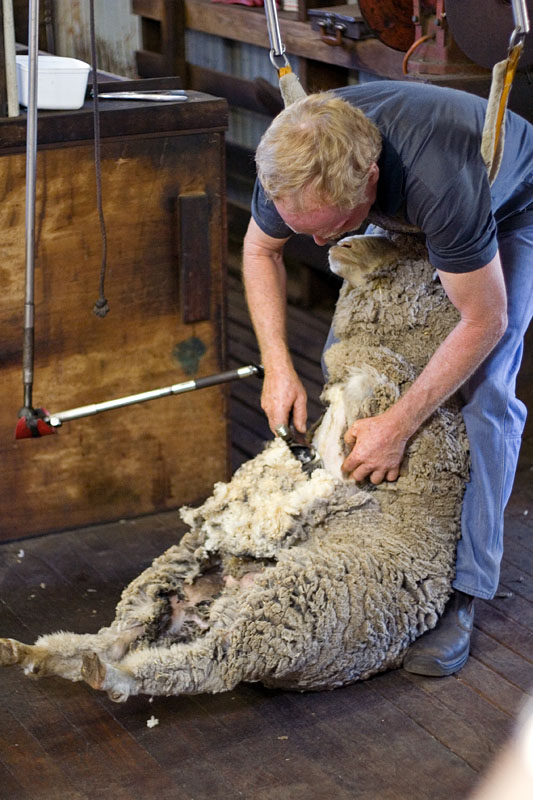
- Second cuts: Short fiber fragments created when the shearer takes a second pass. They tangle during carding and reduce yarn quality. A well-skirted fleece should have minimal second cuts.
Processing options
Raw fleece requires washing before spinning or weaving. The basic process: soak the fleece in hot water (around 60°C) with a small amount of dish soap for 20–30 minutes without agitation. Drain and repeat if necessary. Rinse in water of the same temperature to avoid felting from thermal shock. Press out water and dry flat.
After washing, fleece is carded (using hand cards or a drum carder) or combed (using wool combs) to align the fibers. Carding produces a lofty, air-trapping roving suitable for woolen-spun yarn. Combing produces a smoother, more parallel preparation suitable for worsted-spun yarn.
If hand-processing is not practical, sending fleece to a small mill for washing and carding is an established alternative. Mill output is typically returned as roving, batts, or in some cases, finished yarn.
Spinning wheels and drop spindles in Canada
For crafters interested in spinning their own yarn from raw or processed fiber, spinning wheels are available from craft importers across Canada. Ashford (New Zealand) and Louet (Canadian-based distributor) are the most widely available brands in Canadian retail. Drop spindles — a simpler and lower-cost alternative to a wheel — are available from many Canadian independent makers and fiber shops.
The Wikimedia Commons image below shows a traditional spinning wheel:
Note on pricing: Prices for raw fleece, roving, and locally produced yarn in Canada vary significantly based on breed, processing level, and region. This guide does not list specific prices, as these change seasonally. Contacting producers directly or checking their current listings will give the most accurate picture of what is available and at what cost.
Public references and directories
- Ontario Wool Growers — member directory and general wool information
- BC Alpaca Association — farm directory for British Columbia alpaca producers
- Briggs & Little Woollen Mills — New Brunswick mill producing Canadian yarn
- Wikipedia — Wool — overview of fiber properties and processing
Last updated: May 25, 2026